Candi syrup is an essential ingredient in Belgian abbey beers, adding flavor, color, and fermentable sugars. While it’s easy to buy, there’s something special about making it yourself. Not only is it fun, but it also gives you complete control over the flavor and color of your syrup.
I recently made this syrup to brew a Belgian Dubbel, and the process was both simple and rewarding. Here’s how you can do it too!
Why make your own candi syrup?
You might wonder why you should bother making candi syrup when it’s readily available in stores. For me, it’s all about the craft. Creating your own syrup adds a personal touch to your beer. Plus, it’s surprisingly easy to make.
Another advantage is control: you can experiment with the final color and try different types of sugar. For example, you can replace granulated sugar with brown sugar or cane sugar to add unique flavors.
Finally, it’s cost-effective. Store-bought candi syrup can be expensive, while homemade syrup is much cheaper. That said, if you prefer to buy it, I recommend the candi syrup from the brew store.
ADvertisement
How cooking time affects color and flavor
The cooking time of candi syrup significantly influences its final color and flavor profile. A shorter cooking time results in a lighter syrup with subtle caramel notes, while longer cooking produces a darker syrup with richer, more complex flavors.
- 15–20 minutes: Light amber, mild caramel flavor—great for lighter beers.
- 20–30 minutes: Medium amber, richer caramel tones—ideal for Dubbels or other darker ales.
- 30–60 minutes: Dark amber to brown, intense toffee-like flavor—perfect for robust dark beers like Quadrupels.
The Secret Ingredient: The Maillard Reaction
Most people think candi syrup is just caramelized sugar, but the deep flavors of raisins, plums, and figs in a Trappist ale actually come from the Maillard reaction. While caramelization happens with just sugar and heat, the Maillard reaction requires a source of nitrogen.
Pro-Tip: To get those complex dark fruit notes, add a tiny pinch (about 1/8 tsp) of yeast nutrient (DAP) to your sugar and water mixture. This provides the amino acids needed to trigger the Maillard reaction, giving your homemade syrup that professional “Belgian” depth that you simply can’t get with sugar alone.

Candi Syrup Recipe
This recipe yields about 350 ml of candi syrup, perfect for brewing Belgian-style beers.
Ingredients
- 500 grams granulated sugar
- 250–375 ml water
- 1/4 teaspoon citric acid
Instructions
- Combine the sugar and 250 ml of water in a saucepan. Stir to dissolve the sugar.
- Add the citric acid (1/4 teaspoon) to help invert the sugar and prevent crystallization.
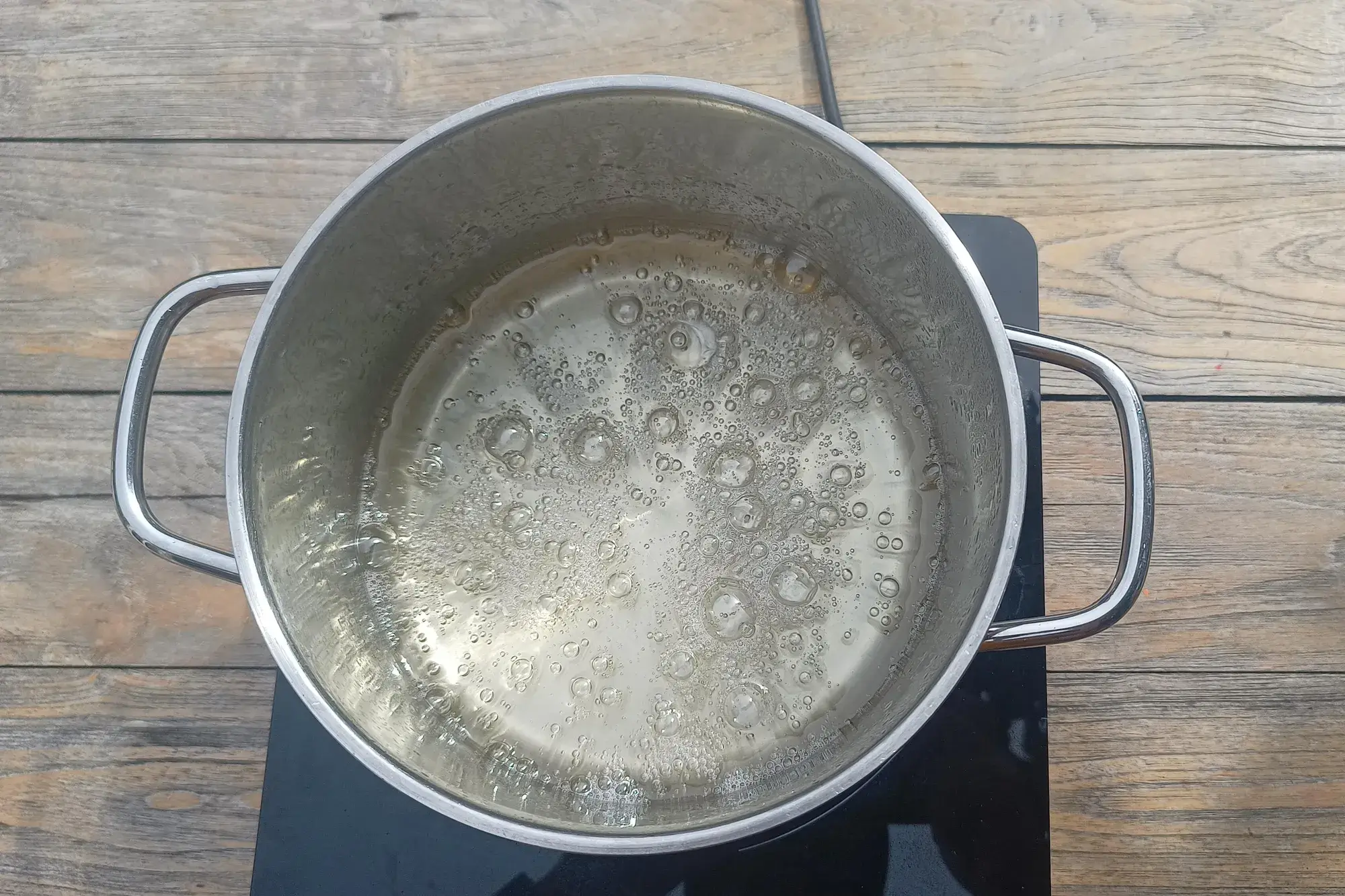
- Heat the mixture over medium heat, stirring occasionally, until it starts to boil.
- Allow the syrup to boil until it reaches your desired color. Use a candy thermometer if you have one—135–145°C (275–293°F) is ideal.
- Once the syrup has reached the desired color, add 125 ml of additional water to keep it fluid.
- Remove from heat and let the syrup cool. It will thicken as it cools.
- Store the cooled syrup in a clean, airtight container.
Tip for safety: In the step where you have yo add some water to keep it fluid. Be extremely careful here. Adding room-temperature water to 145°C (293°F) syrup can cause a violent “steam explosion,” splashing molten sugar (which sticks to skin like napalm) everywhere.
How to do it safely: Wear an oven mitt. Use boiling water instead of cold water to reduce the temperature shock, and add it literally drop by drop at first while stirring constantly.
Stop the cooking immediately
Sugar holds a lot of residual heat. Even after you turn off the stove, the temperature will keep rising, and your syrup can go from “perfectly dark” to “burnt and acrid” in less than 60 seconds.
As soon as you add the final water, remove the pan from the hot burner. If you’re worried it’s darkening too fast, have a larger pan or a sink with an inch of cold water ready to set the saucepan in. This “thermal shock” stops the cooking process instantly, locking in your perfect flavor profile.
Tips for success
First of all if you don’t have citric acid powder, a few drops of liquid citric acid will work just as well. You don’t have to use all the syrup immediately, just store the syrup in a clean bottle or jar. When it’s properly sealed, it will last up to six months.
pH Control: Citric Acid vs. Baking Soda
The citric acid in this recipe helps “invert” the sugar, which makes it easier for the yeast to eat. This is perfect for light and amber syrups. However, if you are aiming for a pitch-black Quad syrup, the Maillard reaction actually prefers a more alkaline (higher pH) environment.
If you want a darker, more pungent syrup, consider adding a tiny pinch of baking soda halfway through the boil. It will foam up (so use a deep pan!), but it will accelerate the browning process and darken the syrup significantly.

This is why you’ll love making Candi Syrup yourself
Making your own candi syrup is not only economical but also gives you the freedom to experiment. Whether you’re brewing a classic Belgian Dubbel or exploring other styles, this homemade syrup will elevate your beer with authentic flavors and colors. Give it a try—you’ll be surprised how easy and satisfying it is!
FAQ about making candi syrup
While you can, it defeats the purpose of making candi syrup. These natural syrups have their own distinct flavors and high water content. Candi syrup is specifically designed to provide high fermentability and specific Maillard notes without the floral or woody flavors of honey/maple. Stick to table sugar (sucrose) or beet sugar for the most authentic Belgian results.
This usually happens if you didn’t add enough water at the end or if you boiled it too long at a very high temperature. The additional water at the final step is crucial to keep it in liquid “syrup” form. If it hardens, you can simply reheat it with a splash of water until it dissolves again.
Actually, excessive use of simple sugars (like homemade syrup) can sometimes weaken head retention because it dilutes the proteins in your wort. To counter this, ensure your base recipe includes some wheat or oats, which provide the proteins needed to keep that beautiful creamy head on your Belgian Dubbel.
If it smells like burnt toast or carbon, it will likely ruin your beer by adding a harsh, acrid bitterness. A tiny bit of “dark” aroma is fine for a Stout or Quad, but if it tastes bitter on a spoon, it’s better to start over. Sugar is cheap; a spoiled 20-liter batch of beer is expensive!
You can, but it’s better to wait. Adding spices like coriander or orange peel to boiling sugar can scorch them, leading to oily or off-flavors. It’s best to keep your syrup pure and add your spices during the last minutes of the actual beer boil or in the fermenter.
